
Marshalltown Previous Resident Eras
A backward address trail changes sources as it moves through time. Start with the present parcel and recorded transfer. When the web index no longer reaches the needed year, use the named historical series instead of assuming the chain ends.
| Source | Marshall County years | Where kept | Best evidence |
|---|---|---|---|
| Assessor and GIS | Current portal | County Assessor and GIS | Present parcel, owner role, situs, legal description |
| Land deeds | 1850 to 1888 | Recorder and State Historical Society holdings | Early instrument chain |
| Land general index | 1851 to 1909 | Historical holdings | Name entry into deed books |
| Town lots and index | 1855 to 1886; index to 1902 | Historical holdings | Old Marshalltown urban lots |
| Auditor town-lot transfers | 1867 to 1949 | Historical holdings | Later urban transfer summaries |
| City directories | 1891 to 1960, with gaps | Collection catalogs and scans | Dated name and address clues |
| Newspaper archive | 1858 to 1930 plus later titles | Marshalltown Public Library archive | Sales, moves, deaths, probate, legal notices |
For a recent transfer, use Iowa Land Records and the Recorder. For an early city lot, use the town-lot index. For a household rather than the owner, add the closest directory, census, newspaper, and probate evidence.
Start Marshalltown House Records
The Marshall County parcel card is the bridge from today's street label to older records. Save the property address, parcel number, legal lot or description, owner display, sale date, seller, buyer, recording number, and any prior parcel or subdivision clue. Keep situs and mailing fields separate.
The owner display is a public record role. It does not identify all previous residents or prove present occupancy. A card may also contain building traits, photos, sketches, permit rows, and several kinds of value. Use those fields to date changes, not to infer private facts about a household.
Walk Marshall County Deeds Back
The deed chain is the strongest ownership spine for past residents research. Match each step by legal description and instrument. The county has not published an official online cutoff year, so note the first point where web results stop and ask the Recorder about the next book or index.
- Search the current address through the Marshall County Property Search and copy its owner, parcel, and full legal description.
- Find that owner's purchase in Iowa Land Records. Record the deed type, date, grantor, grantee, instrument, and image status.
- Search the seller, who was the grantor, as an earlier grantee. Use a date window before the sale.
- Repeat while the legal description still matches. If one document lists several parcels, do not merge them.
- At the online edge, request the deed book, town-lot index, auditor transfer, or other historical series from the Recorder or archive.
- Grantor
- The party giving or transferring an interest.
- Grantee
- The party receiving the interest.
- Chain of title
- The linked sequence of recorded ownership transfers.
- Legal description
- The lot, block, subdivision, section, or other land text that identifies the property beyond its street address.
Marshalltown Deed Search Screen
The Iowa Land Records simple search supports county, recorded-date, party-role, document-type, and image filters.
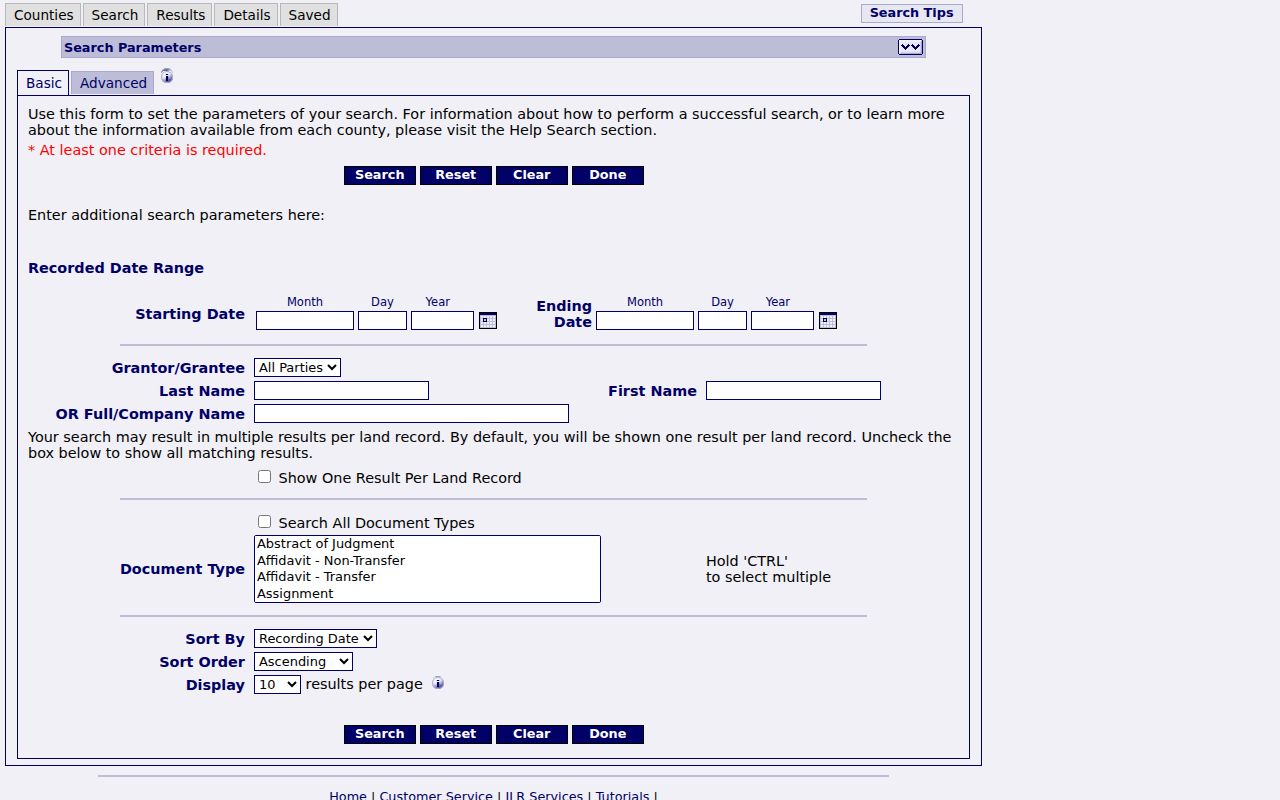
A result can show county, document type, recorded date, grantor or grantee role, party name, record number, and image availability. Those fields let the next backward search stay tied to one transfer.
Old Marshalltown Lots Survive
Modern numbers can fail on an old Marshalltown property. The research found no official citywide renumbering date, so do not invent one. Shift to the lot, block, plat, intersection, and deed description. Historical holdings separate urban town lots from other land and provide several overlapping indexes.
Use the 1855 to 1902 town-lot general index as a name or lot entry point, then inspect the 1855 to 1886 town-lot record. Auditor town-lot transfers run from 1867 through 1949. Rural or early land may instead appear in the 1850 to 1888 deed run, 1851 to 1909 general index, or 1856 to 1919 auditor land transfers.
The county's recording guidelines explain the identifiers that make a new document searchable.
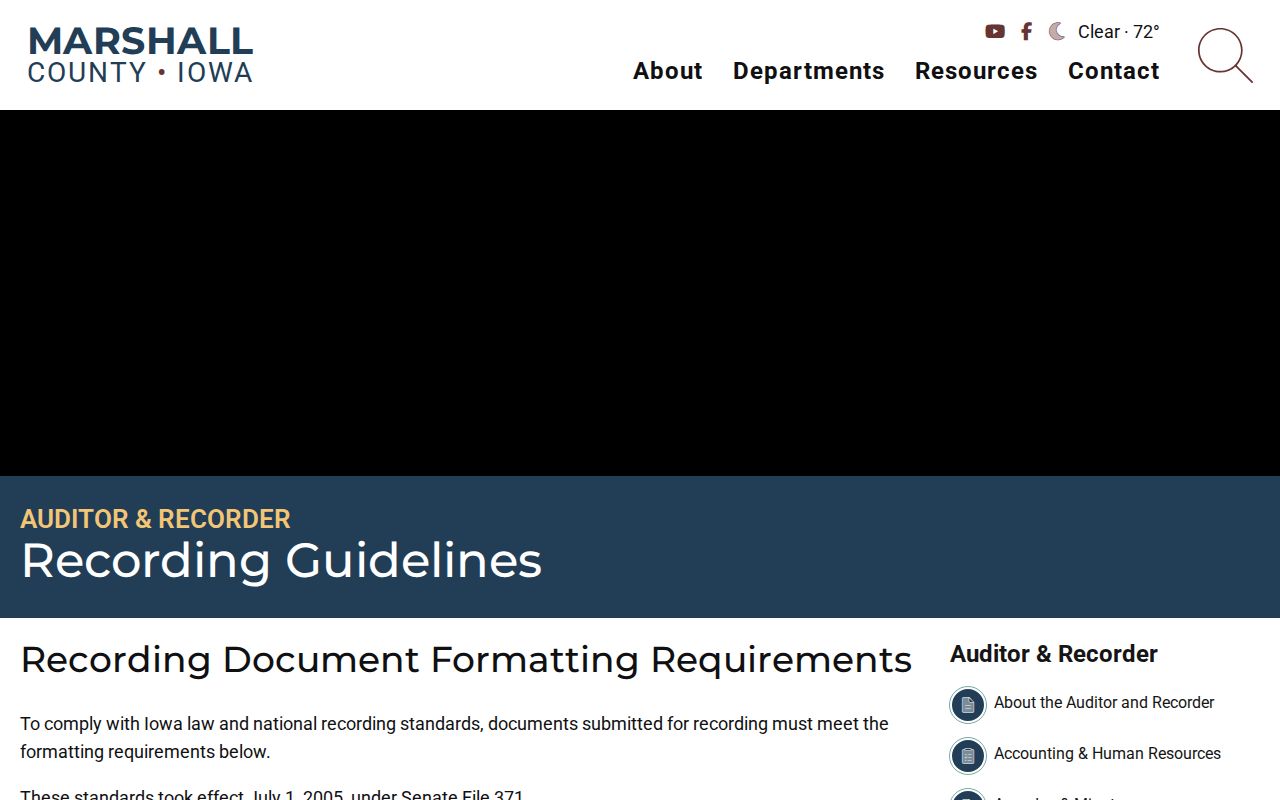
Grantors, grantees, a document title, taxpayer details, and the legal description or parcel ID where required help connect a filed transfer to the right Marshalltown lot.
Probate Finds Marshalltown Heirs
A neat deed-to-deed chain may break when a property passes through an estate. Switch from the deed index to Marshall County's probate general index, which spans 1851 to 1975, and wills from 1853 to 1928. Related case files, inventories, guardianship papers, bonds, and heirs or estate material can explain how title moved.
An obituary or legal notice can narrow the death date and name an executor, spouse, or heir. Treat that as a route to the probate file. A newspaper notice is not itself the recorded transfer, and a probate name must still be matched to the address or legal parcel.
Marshalltown Title Side Trails
Previous residents sometimes appear at a title event that is not an ordinary sale. Marshall County historical holdings include mortgage indexes from 1852 to 1906, sheriff deeds for 1855 to 1868, and tax-sale deeds from 1871 to 1931. Releases, easements, assignments, plats, and surveys are also in the Recorder's document scope.
These sources explain a forced sale, debt release, shared drive, parcel split, or boundary change. They do not establish who slept at the address. Return to directories, census pages, obituaries, and local news for the household layer.
The county's recording fee page identifies the document types the Recorder accepts.
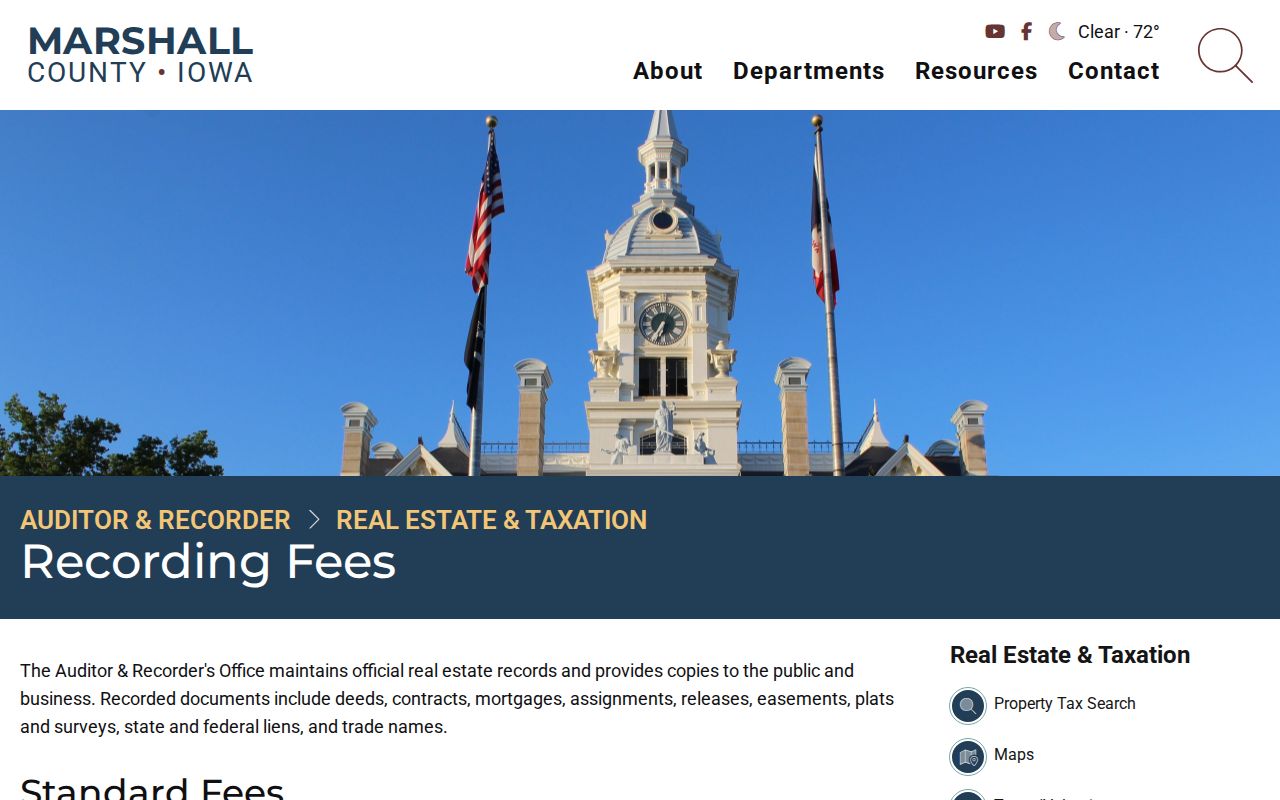
The posted schedule includes deeds, contracts, mortgages, releases, easements, plats, surveys, and liens. It describes filing charges, so ask separately about copy and certification costs.
Marshalltown Past Household Clues
Owners are only one part of the answer to who lived here before. Choose a city directory edition nearest the transfer year. Search both the surname section and any address or reverse section that is actually present. The verified Marshalltown edition trail covers many years from 1891 through 1960, but gaps remain and the local reverse-directory run was not confirmed.
- Place the deed owner on a timeline with the transfer date.
- Check the nearest directory edition for the name and address.
- Pair that result with the closest publicly available federal census schedule.
- Search the library newspaper archive for the surname plus street, estate, sale, or obituary.
- Record conflicts and seek a deed, probate, or vital record that can resolve them.
The edition holdings and reading method are detailed on the Marshalltown city directories page. A missing year does not prove the household left.
The library's Advantage Preservation archive adds another dated layer. Search free text for the surname or address, add a second term such as a street, estate, or event, then narrow by Iowa, Marshalltown, newspaper title, and date. Overlapping titles can report the same event in different forms. OCR is only an index to the scanned page, so read the image and save its title, issue date, and page. That care can distinguish past residents from a visitor, witness, contractor, or person named only in a legal notice.
When Marshalltown Records Moved
Marshall County's official history tells a striking local records story. During the 1859 county-seat dispute, records were moved overnight by oxen to Marshalltown. The town had first been platted as Marshall in 1853, and early sources may use Marshall, Marietta, county, or later Marshalltown labels.
This is more than local color. A nineteenth-century deed, probate file, town-lot entry, and newspaper notice can describe the same land under different place words. Search the legal lot and party names across each form. The surviving historical series show that the paper trail continued even when the county seat and town name changed.
Marshalltown Storm Era Parcels
The 2018 tornado damaged downtown and the courthouse tower. County history says the courthouse remained standing and was rebuilt, while the city plan notes later demolitions among historic-district properties. A structure can therefore change while its parcel and recorded chain continue.
For a storm-era house history, compare the 2002 historic-district context, 2018 newspaper pages, 2024 to 2026 permit reports, current aerial imagery, parcel card, and deed. Do not assign a person to a damaged building unless independent records make that link.
The permit report may date work, while the deed shows a legal transfer and the aerial shows mapped context. Each source has a different update date. Write those dates beside the result. If a building vanished but the lot remained, continue the chain with the parcel and legal description. If lots merged after the storm, inspect the recorded plat or adjustment instead of carrying the old street number forward.
Limits on Marshalltown Previous Residents
A deed proves a recorded property role, not occupancy. A directory captures one edition, a census one enumeration date, and a newspaper one reported event. Parcel splits, changed numbers, spelling variants, confidential records, and missing online years can all create gaps.
Keep a source log with the date, custodian, record role, address form, legal description, and conflict notes. Confirm living people with care. Iowa Safe at Home and other confidentiality rules may shield an address, and no historical curiosity justifies exposing or tracking someone now.
Lawful use. Research Marshalltown previous residents for family or house history, never to locate, pressure, threaten, or harass a living person.